
by Eunice | Apr 18, 2023 | Business
Bookkeeping and Record-Keeping
There is a common misconception that accountants are only for larger companies with £ millions of income, but this couldn’t be further from the truth. Keeping accurate financial records is crucial for any business, regardless of size, and an experienced accountant can provide valuable support in this area.
A small business accountant can help you manage your bookkeeping and keep your financial records in order. This helps with tax compliance and gives you a better understanding of your business finances, which is crucial for making informed financial decisions.
Tax Compliance
One of the primary responsibilities of an accountant is to help you comply with tax laws and regulations.
If you hire an accountant, they will take over preparing and filing your tax returns accurately, ensuring that you take advantage of all available tax deductions and credits, and providing advice on minimising your tax liabilities.
In addition, accountants can help you resolve any tax-related issues that may arise, such as an audit or a dispute with the tax authorities. They can guide you through handling these situations and help you negotiate a favourable outcome.
Sound Financial Plans and Decision
With a small business accountant, you can easily see your business’ wealth and financial performance. Having financial reports and analysis from your accountant, you can make much more sound financial decisions on a solid basis and not just a wild guess of whether it will benefit your business.
Accountants can also help you plan for the future of your business with limited resources. They can do this by providing guidance on best practices for financial management to ensure that you stay on track with your business goals.
For example, your accountant can help you create a budget, forecast future cash flow, and analyse financial data to help you decide for your business, like investing in new equipment or expanding your product line.
Cost Savings
Hiring small business accountants can add up if you pay for them per hour of service, but the benefits you reap when you have one compensate for the fees you may pay.
Depending on your accountant’s quality of service, they can help you identify opportunities to reduce expenses and maximise profits, ultimately leading to cost savings for your business.
And as mentioned above, they can help you manage your tax affairs and provide accurate financial reports. This significantly reduces the risk of getting tax penalties for non-compliance or overspending resources since they have enough knowledge and expertise in the proper accounting and tax computations.
Peace of Mind and Time Savings
As a business owner, you should know that there are different accounting and legal requirements with which you must comply. Doing it alone can be a burdensome and time-consuming task for you.
Instead of allocating your precious time to these administrative tasks, why not give them to someone with expertise? Doing it yourself can take time since you must research different accounting principles, tax laws, and business regulations.
Accountants are lifesavers when you want to value your time and do your day-to-day business functions. Moreover, handing these tasks to them can provide peace of mind and assurance that your business reports the correct numbers to the regulatory bodies.
Frequently Asked Questions
What is accounting, and why is it essential for small businesses?
Accounting involves the systematic and organised recording of a business’s financial transactions to provide insights and information necessary for making sound business decisions. It includes maintaining accurate records of a business’s income, expenses, and assets.
For small businesses, good accounting is essential as it gives owners a better understanding of their financial standing by providing up-to-date and accurate financial information, enabling them to make informed decisions.
Why can’t I do the accounting myself?
As a small business owner with limited resources, you may be tempted to handle the accounting yourself. However, this may not be the option for you because of different reasons:
Time Constraints
As we tackled earlier, having an accountant saves time. Since they already know what they are doing, they can deliver the financial reports and tax returns on time. If you try to handle everything alone, it will take up your valuable time that could be more beneficially spent on other aspects of your business.
Lack of Expertise
Accounting requires expertise, including knowledge of accounting principles, tax laws, and regulations. If you aren’t familiar with these areas, you may make mistakes that could have severe consequences for your business.
Independence
Having an independent small business accountant handle your finances can give you an objective view of your financial performance. This can be especially valuable when making critical financial decisions.
What happens if I don’t comply with the mandated accounting and tax requirements?
There are severe consequences for failing to comply with the proper accounting standards and tax laws set by the regulatory authorities. Some of these are penalties, fines, and interests for not filing and paying your taxes on time and correctly.
In addition, there is the possibility of legal issues or even losing your business licence, which can damage your reputation in your industry. And lastly, this can result in inaccurate financial records, making it difficult to track your financial performance and growth, which would have helped you to make informed decisions.
Related Posts
When Should You Hire an Accountant?
VAT in the UK: When to Talk to an Accountant
by Eunice | Apr 14, 2023 | Tax & Accounting
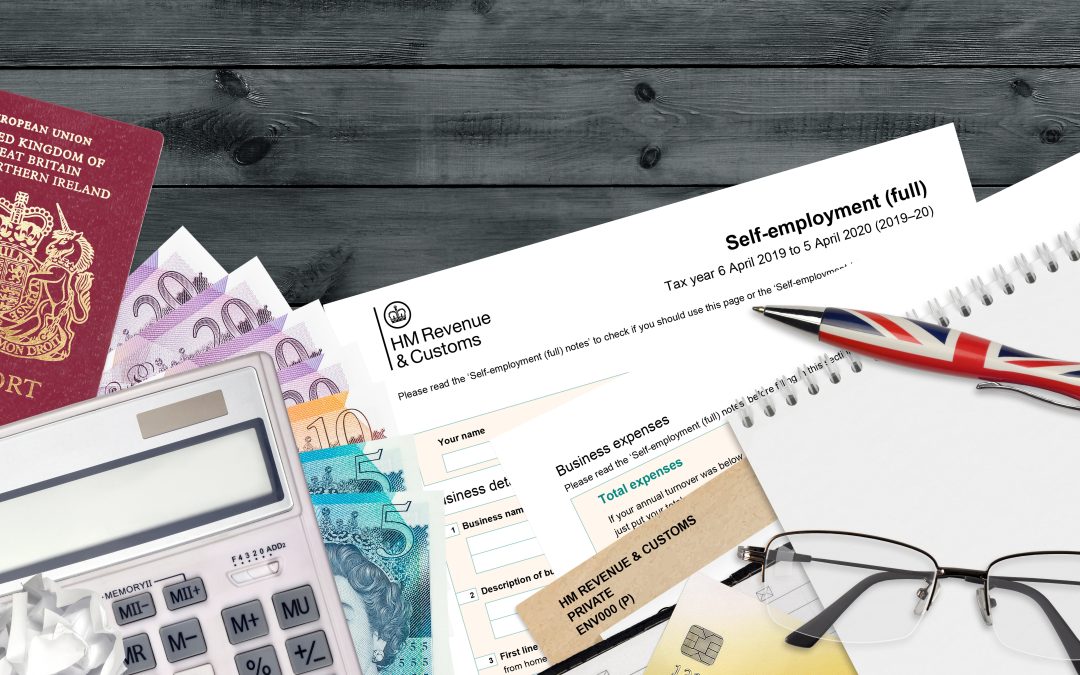
TITLE: Tax Guide: 14 Self Assessment Tax Expenses You Should Claim
If you still don’t know how to properly handle your self assessment tax, worry no more because this blog can help you.
There is a possibility that you are paying much higher taxes than you need to.
Your tax liability significantly depends on the profit you make. However, there are a wide variety of expenses you can claim back against your taxable income to reduce your tax liability. This is because the tax offices acknowledge that running a business comes with costs, not just an inflow of revenue.
It can be confusing, and challenging to identify self-assessment tax expenses you could deduct, especially if you are not well-versed in accounting. Continue reading and learn more about it in this blog!
Donations to Charities
If you are a higher-rate taxpayer and donated to charities recognized by HMRC in the taxable year, you can claim tax relief on donations made under the Gift Aid scheme.
You can claim the difference between the basic tax rate claimed by the charity on your donation and the higher tax rate you actually pay.
But if you have forgotten about claiming or are unaware that you could, you can still claim the tax “overpayment relief” within four years after the end of the tax year the donation happened.
Home Office
This applies if you are working from home. Any expenses related to your home, including utilities, rent, council tax, and mortgage, can be claimed from your taxable profit, provided that you can compute the proportion of how much applies to your business.
HMRC sets no specific guidelines to compute for the apportioning, only that you do it on a fair and reasonable basis.
Bad Debts
This expense is often forgotten or unused due to a lack of awareness that you can claim it. In claiming bad debts from your taxable income, you should ensure that the invoice is genuinely not recoverable anymore.
Additionally, this expense is only claimable from your self-assessment tax if you use accrual basis accounting. The reasoning is that in cash basis accounting, you do not account for unpaid invoices as your taxable income yet, so there is nothing to deduct.
Mileage Cost
If you travel for business purposes, you can claim for mileage allowance, depending on the vehicle you drive:
- Car or van – 45p per mile for 10,000 miles; after that, 25p per mile
- Motorcycles – flat 24p per mile
- Bicycles – 20p per mile
Note that the mileage used should not be for personal but only for business travels. This also covers other travel expenses, such as, insurance, repair and maintenance, fuel, parking, accommodation, meals, etc.
Stationery
If you have an office, you can claim anything on your desk on your self-assessment tax. Anything from the paper you use, ink, printer, pens, desk, and office chairs, so long as you use it for business, you can deduct the cost from your taxable profit.
However, those more significant purchases, like high-quality computers with three years of useful life or more expensive systems and software, cannot be immediately claimed as expenses. There are only capital allowances as tax relief for these types of expenditures.
Asset Depreciation
Many often forget to claim depreciation expenses after not declaring the purchased asset as part of your self-assessment tax return in the first year.
As mentioned previously, expensive assets with long-term use cannot be deducted immediately on the first year of purchase. Instead, the amount is depreciated gradually, and the claimable amount is the depreciation expense per year.
Memberships and Subscriptions
Membership and subscription fees can be claimed as deductible on your self-assessment taxable profit if they are related to your work. This includes memberships in professional organizations, trade associations, and unions.
Professional Fee
Suppose you hire solicitors, accountants, financial advisors, and other professionals who provide services to assist you related to your trade or business. In that case, you can claim the fees you paid to them and declare them on your tax return.
Subcontractors
Aside from professionals, you may have also hired subcontractors for your business. This includes individuals or businesses who provide services to support you in carrying out your trade or business, such as contractors, freelancers, or agencies.
Marketing
Most business owners spend on marketing but often forget to claim marketing costs. These costs include advertising, promotional materials, market research, and other activities that help promote your trade or business.
However, there are exceptions to this deduction. Expenses incurred to entertain clients, suppliers, or hospitality events cannot be part of claimable expenses on your self-assessment tax return.
Bank Charges
Bank charges include fees for bank accounts, overdrafts, and other bank services you use during your trade or business. These are all deductible from your taxable profit, except if you use cash basis accounting, in which you can only claim up to £500.
Phones and Communications
This includes expenses for business-related phone and internet services, as well as costs for mobile phones, landlines, and other communication devices. However, if you use them for both business and personal, as with home office expenses, you should come up with apportioning computation fairly and reasonably.
Clothing
Clothing costs are also one of the expenses you should remember to claim. The requisites for this expense to be deductible are simple: it must be work-related only.
You cannot claim for your day-to-day clothes, only for work-related uniforms and protective clothing needed to carry out work.
Training and Courses
Any training and courses you paid to expand your knowledge and skills related to your business can be claimed as part of your self-assessment tax return. However, you cannot do so for those you paid for before starting your business, such as guide courses for start-ups.
Frequently Asked Questions
What expenses can I claim on tax without receipts?
You can claim expenses without receipts using reasonable estimates, but you must explain why you estimate these as part of your self-assessment tax return.
Common examples are online subscriptions which usually do not have invoices. You are good to go as long as you prove these amounts go out of your bank account.

by Eunice | Apr 10, 2023 | UK Accounting
What is an HMRC Tax Investigation?
A tax investigation is a right of His Majesty’s Revenue & Customs (HMRC) and is conducted to ensure you are paying the right amount of tax. They do this by checking your financial records and tax returns.
By law, you must cooperate when you receive an official investigation letter or a phone call from HMRC. HMRC will explain what they plan to check, which can be a specific part of your tax returns or a broader scope of your tax affairs.
What prompts an HMRC Tax Investigation?
To avoid getting investigated, you should first understand what triggers it. There can be several reasons why HMRC might want an investigation of your taxes, which are:
You omitted something or made a mistake
Even a small mistake can trigger HMRC to investigate, whether it is a tick box you forgot to click in your self-assessment return, incorrect figures, or inaccurate supplementary information.
HMRC now has a powerful and sophisticated computer system that automatically cross-checks your submitted tax returns to the existing data the system has from you.
You frequently file your taxes late
You have until the 31st of January to complete and submit your tax returns for the previous year. If you continually file your self-assessment tax return late, this can prompt a tax investigation.
There are inconsistencies and fluctuations
With the data tools, HMRC can check the variations in figures on your tax returns, so if they notice a considerable amount of fluctuations, they can check your financial records to confirm.
They can also investigate if you provide information different from the norms of your industry or sector type.
You are classified as suspicious
The most aggravating reason for the investigation is if HMRC holds evidence and proof of fraud and deliberate tax avoidance. This can come from proven third-party tip-offs.
Other uncontrollable circumstances
Aside from the above mentioned, there could also be reasons that are out of control, such as you are classified by HMRC as a high-risk from their risk-based selection of businesses to check.
Your industry can also be part of their target area of interest because of a high chance of tax evasion, etc., or you are just selected randomly. In short, you just happened to be chosen for an investigation and did nothing wrong.
What to do to reduce your risk of being investigated?
Now that you know the possible reasons, it is much easier to understand and remember what to do to avoid tax investigation from HMRC. Listed below are the tips we have for you:
File on time and ensure accuracy and completeness
Remember that filing your tax return late triggers an investigation, so you should ensure that you submit it on time. It would be better if you could file your tax returns earlier to have more time to check for any omissions, errors, or mistakes you may have made.
Use supplementary notes when appropriate
HMRC can quickly initiate an investigation of your taxes, but in the end, the reason may be a mere misjudgment of the figures. To save time, you can add explanatory texts for amounts and information you think HMRC and their data tools may notice and consider a red flag.
Do not deliberately fabricate or conceal numbers
You may think it is onerous to pay the right amount of tax and consider lowering it by adding costs or hiding your actual income. However, with the advancements of HMRC as they approach digitalization, these fraudulent activities are likely to be noticed.
You should note the consequence of deliberately paying an incorrect amount of tax. Once proven through an investigation, you will have to pay heavy penalties, offsetting the previously saved tax on your return and even exceeding it.
And aside from the penalties, you may also face criminal charges because of tax evasion. That is why it is not a good idea, for the sake of your reputation.
Hire an independent accountant
The best thing to do to avoid errors on your tax returns is to get help from a reputable service provider to handle your tax affairs. Aside from the confidence you have that they file your tax returns on time and correctly, hiring an accountant also gives you more time for your business.
Frequently Asked Questions
What are the chances of being investigated by HMRC?
Even if you know that you paid the correct tax payable and provide accurate information on your tax return to HMRC, you do not automatically escape their radar. As mentioned in the reasons for being investigated, there are still out-of-hand circumstances. So technically, everyone is at risk.
It is impossible to determine the probability of your business being selected for an HMRC investigation, but it is possible to reduce the risk, as we tackled in this blog.
What happens if you ignore the HMRC investigation?
The more you ignore the HMRC notice of investigation, the worst it gets. HMRC has the power to impose penalties against you. To make it worse, they can also involve the closure of your business.
How far back will HMRC investigate?
In general, HMRC has the power to investigate you for up to 20 years from the date of the tax year being investigated. However, the exact time frame can vary depending on the type of tax and the circumstances of each case.
For example, if there is evidence of serious fraud or criminal behaviour, HMRC may be able to investigate further back. On the other hand, if the taxpayer has a good compliance history and the errors in their tax affairs are minor, HMRC may limit the investigation to the more recent tax years.
For careless tax returns, it can be up to 6 years back, and for innocent errors, it can be up to 4 years.
Conclusion
Avoiding HMRC tax investigation altogether is impossible. Still, the risk can be reduced to a minimal probability by filing tax returns accurately and on time.

by Eunice | Apr 6, 2023 | E-Commerce
1. Saves You Time and Trouble
Whether you’re managing one or several online stores, it doesn’t discount the fact that you will have many tasks to keep operations running smoothly. Apart from your daily tasks, you probably do your taxes and bookkeeping when you think you can’t afford an accountant.
Despite having basic accounting skills and knowledge, there’s always the risk of errors—inaccurate financial figures, wrong tax amounts, etc. These oversights can be costly to your business as you face penalties for non-compliance or violations. In some cases, you may even be subject to an audit.
With eCommerce accountants onboard, they will take care of the tedious and challenging tasks, freeing up time you can spend generating more sales. Moreover, you will have peace of mind knowing that an expert is focused on the details.
2. Keeps Your Finances in Order
Doing your own accounting may sound feasible at the early stages of your operations. However, it can quickly get complicated as your business picks up. Eventually, you won’t have the time to manage your finances.
But when you work with a team of experienced eCommerce accountants, there’s no need to worry over the minute financial details of your business. You don’t have to be anxious over losing sight of who owes you, how much is owed, and when your obligations are due. A professional will help you get back on track.
Besides bookkeeping, an accountant can reconcile your bank statements, calculate taxes, file returns, and prepare financial reports. Sterlinx Global can even assist you with rebate claims if you’ve overpaid taxes—those refunds can go back into the business as additional inventory or capital.
Since they have an outside view of your business’ accounts, they can give you a summary of current performance and health—is your company earning or losing money? Also, monitoring the key metrics and crucial aspects—such as cash flow—lets you understand financial matters at a glance.
3. Reduces Tax-Related Concerns and Costs
No matter the size of your business, you will benefit from a well-executed tax planning strategy, which is only possible when eCommerce accountants help you.
With proper tax planning, your business can reduce its tax liability by deferring or accelerating income, or holding off or reflecting expenses. Whatever you choose, rest assured that accountants will keep your finances on track by paying attention to your taxes.
Entrepreneurs are usually stressed over taxes since they worry as to whether they’re paying the right amount or filing their returns on time. Often, the more complicated their tax obligations are, the more stressful and prone to errors their compliance will be if unassisted.
Experienced accountants understand tax laws and continue to be updated on changing regulations. They will inform you of the revised rules, ensuring you’re always compliant to avoid significant penalties and violations. With the right tools and knowledge, you can steer clear of unnecessary charges that impact earnings.
4. Deals with the Government on Your Behalf
When you have a business, dealing with various governing bodies is inevitable at some point. This kind of interaction often leads to stress and anxiety, causing you to lose focus. But if you’re working with a team of eCommerce accountants, you can be at ease knowing they already have it covered.
Apart from tax preparation, they can also:
- Accomplish and file the required compliance documents
- Update your business’ status in the government’s company register
- Prepare and submit annual statements of accounts
Besides paperwork, a good accountant can help should your business be audited. If you’re under investigation, they will guide you on working within an ongoing audit, help you respond to official enquiry or review, and carry out tasks to submit the required documents for clearance.
Sterlinx Global even has a team of local accountants to help eCommerce businesses with their VAT registration and compliance requirements in the country where they have a customer base.
5. Gives Sound Business Advice
Many small businesses and lean startups stumble at some point. And while it was a learning experience, most would rather avoid the costly pitfalls and preferred to have someone guide them at every stage of their venture.
When you bring in an eCommerce accountant, you can expect them to provide advisory services for improving profitability and scaling your operations. Since they work with different businesses, they have a wealth of knowledge to help their clients work through their financial challenges.
Their keen sense of how to run a business efficiently is helpful to digital entrepreneurs when planning and implementing a strategy. For example, you want to improve your bottom line. An accountant can propose price changes along with better cost management.
These insights, often gleaned from years of experience, are highly valuable to business owners in sidestepping expensive mistakes.
6. Helps with Decision-Making
Besides being excellent sources of insights, eCommerce accountants can be reliable sources of support for your business. They are objective since they don’t have bias, unlike your friends and family, but at the same time, they know how your company works.
That’s why you can trust their opinion, because they want you to succeed—after all, they are your partner in business. Moreover, they can crunch the numbers and back up their advice with figures. They will provide detailed knowledge of your finances to help you decide your next steps.
You can ask your accountant to produce key metrics and create financial projections as your guide on whether to push through with an expansion strategy.
Frequently Asked Questions
When should you hire an accountant?
There is no single right time to get an eCommerce accountant.

by Eunice | Apr 2, 2023 | US Updates
1. You Have Two Options for Company Structure
Like in most countries, you can do business in the US as a sole proprietorship or a company; however, there are more cons than pros when you operate as a sole trader. For instance, sole proprietors do not have significant protection against liability—their business obligations become their personal debt.
There are two common business structures in the US for foreign entrepreneurs: limited liability company (LLC) and C corporation (C-corp). Both insulate their owners from personal liability and debts because they are considered separate legal entities.
LLCs and C-corps can have foreign members or shareholders, unlike S-corporations, which can only be owned by US residents.
2. Determine the Best Corporate Entity for Your Business
Before proceeding with the company registration USA process, you must decide which of the two—LLC or C-corp—is the most suitable structure for your business. Below are some differences.
An LLC is not subject to the stringent bookkeeping requirements a C-corp does. It is easier to set up and offers flexibility but enough protection to its owners. Another advantage is avoiding double taxation—an LLC does not pay taxes on its profits, which are passed through to its members.
A C-corp is taxed twice. It must pay corporate taxes on its earnings before distributing profit, and its shareholders must pay personal income taxes on dividends received. However, a C-corp can easily raise more capital by offering stock shares to external investors.
3. Delaware Is an Ideal State for Company Formation
Regarding company registration USA, non-resident entrepreneurs can choose to do it in over 40 states. The laws and regulations vary for every state, and they will impact your taxes and overall business operations.
The best state to register is where you’ll conduct most of your business. But if you run an online operation or do business across various locations, consider setting-up-shop in a state with low hurdles and tax burdens.
Delaware is particularly preferred for its corporate law protecting owners and officers and its openness to foreign entrepreneurs and management. If you wish to incorporate in Delaware and speed up the process, consult an expert from Sterlinx Global.
4. A US Address Isn’t Necessary
As a foreign national, an advantage in Delaware is that this state does not require a physical address when establishing your company, unlike most US states. Having a physical presence in the state is not necessary for incorporating your LLC, but it’s necessary to enlist the services of a registered agent.
They will serve as the liaison between your business and the local government, receiving documents and transacting on your behalf. Sterlinx Global can act as your representative and provide a US address for your important correspondence.
5. You Don’t Need a Visa to Set Up Your Business
Company registration USA as a non-resident does not require a visa. There’s no need to obtain a valid American visa, which can be a significant hurdle, to incorporate your business in the country.
Managing your LLC from outside the US is permitted, so it doesn’t entail a work visa. It will only be required if you enter the country to work under your business. In that case, you must apply for an E-2 visa as a foreign entrepreneur.
6. Have a List of the Required Documents
When incorporating as an LLC in the US, you must prepare the following documents:
- Articles of Organisation
- LLC Membership Certificate
- IRS Form SS4 or the Application for Employer Identification Number (EIN)
- Office address
Documentary requirements vary from state to state; the above list may be lacking for other states. Sometimes, they may require a US bank account and Certificate of Formation. Working with a registered agent like Sterlinx Global ensures proper compliance.
7. Understand the Company Registration USA Process
Incorporating your company generally involves the following steps:
- Pick a unique name for your company that has not been registered or used.
- Choose a state, submit the legal documents to the proper agencies, and pay the required fees.
- Obtain your EIN. If you work with an agent, they can handle it for you.
Again, the steps may differ for each state. For instance, in some states, you must open a business bank account first for your application to be approved.
8. There Are Benefits to Registering as a US Business
Entering the US market is a lucrative venture. Apart from this, there are other benefits to company registration USA as a non-resident, such as:
- Low corporate taxes: Some states offer financial incentives to foreign investors, encouraging them to establish their operations in said locations.
- Access to technology: The US is among the most technologically advanced countries in the world. Working with the latest technology eases company operations.
- Equal treatment: The country’s laws and regulations do not discriminate between foreign- and locally-owned businesses, putting you on equal footing with your competitors.
9. You Have Tax Obligations
Although there are financial incentives to starting a business in the US, your newly established LLC is not exempt from complying with state and federal tax laws. You automatically have obligations as a taxpayer.
For example, you are an Amazon seller with buyers in the US. You have to collect and remit sales tax to the proper authorities. And if your LLC has other US-sourced income, it’s crucial to settle its corporate taxes. Business taxation can be confusing for corporate entities, so partner with an experienced tax advisor.
Part of compliance is filing quarterly tax returns.



