
by Ariful | May 23, 2026 | US Updates
The landscape of US sales tax has undergone a seismic shift, and if you are selling into the American market, you simply cannot afford to look away. What used to be a fragmented system of individual seller responsibilities has evolved into a centralized, platform-driven model. These "Marketplace Facilitator Laws" are now the gold standard across the United States, and they have completely rewritten the rulebook for international brands and digital businesses.
Whether you are operating from the UK, Canada, or Australia, understanding how the IRS and individual states view your transactions is the difference between a thriving global expansion and a crushing tax audit. At Sterlinx Global, we see firsthand how daily IRS updates and state-level changes impact our clients' bottom lines. This is why staying compliant is no longer just a "back-office task", it is your new secret weapon for growth.
The Big Shift: From Seller Responsibility to Platform Accountability
Historically, the burden of collecting and remitting sales tax sat squarely on the shoulders of each individual seller. If you sold a widget to a customer in Florida, it was your job to figure out the tax rate, collect it, and send it to the state. However, as millions of small and international sellers flooded platforms like Amazon, Etsy, and Walmart, state governments realized they couldn't efficiently track everyone.
The solution? Marketplace Facilitator Laws.
These laws mandate that the "facilitator", the platform that lists products and processes payments, is now responsible for collecting and remitting sales tax on behalf of the third-party sellers using their platform. By 2026, every US state with a sales tax has some version of these rules in effect.
Understanding Economic Nexus in 2026
While the marketplace might collect the tax, your business still has to deal with "Economic Nexus." This is the legal threshold of economic activity that triggers your obligation to register with a state.
Common thresholds include:
- $100,000 in gross sales into a specific state.
- 200 or more separate transactions into a specific state (though some states are phasing this out).
Don't worry, just because you hit a threshold doesn't always mean you'll be paying more out of pocket. Often, it just means you need to register and report. However, the rules on how you calculate these thresholds vary wildly by state, making USA tax compliance matters more complex than they appear at first glance.

Who Exactly Is a Marketplace Facilitator?
The definition of a marketplace facilitator is broader than you might think. It isn't just restricted to retail giants like Amazon. In 2026, a platform is generally considered a facilitator if it:
- Lists or advertises products, services, or digital goods for sale.
- Processes payments or handles the checkout process for the buyer.
- Takes a fee or commission for the transaction.
This category now encompasses app stores, food delivery services, gig-economy platforms, and even B2B SaaS marketplaces. If you are selling through a third-party site that touches the money, they are likely your marketplace facilitator. This shift is a core component of the ultimate guide to global e-commerce expansion, as it simplifies collection but complicates registration requirements.
Why International Sellers Must Pay Attention
If you are an international seller, you might assume that because Amazon or eBay is collecting the tax, you are "off the hook." This is a dangerous misconception. The reality is that marketplace sales can still create "nexus" exposure for your business.
The Problem of "Mixed" Sales
If you sell through Amazon (marketplace) but also have your own Shopify store (direct-to-consumer), you are in a high-risk zone. Most states require you to count all sales, both marketplace and direct, to determine if you have reached the economic nexus threshold.
For example, if you sell $95,000 via Amazon and $6,000 via your own website into New Jersey, you have exceeded the $100,000 threshold. You must now register in New Jersey and collect tax on that $6,000 of direct sales. Failure to do so leads to penalties that far outweigh the tax itself.
The "Register but No Tax" Paradox
In some states, you are required to register for a sales tax permit even if the marketplace is collecting 100% of the tax for you. You then have to file "zero" returns or report the marketplace sales as "exempt." If you miss these filings, the state may assume you owe money based on your estimated volume and issue a default assessment.

State-by-State Complications You Can’t Ignore
The US doesn't have a single "Sales Tax." It has 45 different state-level systems and thousands of local jurisdictions. This is why a one-size-fits-all approach to US tax is impossible.
- Texas: Texas is notoriously strict. They prohibit facilitators from using simplified local rates in many cases. They require destination-based calculations, meaning the exact tax rate depends on the buyer's front door.
- Louisiana: Recent updates in 2023 and 2024 have changed how economic nexus is calculated, focusing on "retail sales" and requiring facilitators to include all platform sales when determining if they must register.
- Washington: Even if the marketplace collects sales tax, you might still owe the Business & Occupation (B&O) tax. This is a gross receipts tax that applies to your total revenue, regardless of who collected the sales tax at checkout.
Navigating these differences is essential to avoid mistakes with tax filings that can trigger audits across borders.
Actionable Checklist for 2026 Compliance
To stay ahead of the IRS and state tax authorities, follow this structured approach to your US operations.
- Map Your Sales Volume: List every US state where you have customers. Calculate your gross sales and transaction counts for the last 12 months.
- Differentiate Your Channels: Identify which sales went through a "Facilitator" (like Amazon) and which were "Direct" (your own site or manual invoicing).
- Check Threshold Rules: Determine if a state counts marketplace sales toward your nexus threshold. (e.g., Mississippi excludes them, but New Jersey includes them).
- Register Where Necessary: If you hit the threshold, register for a sales tax permit immediately. Do not wait for the state to contact you.
- Maintain Records: Keep certificates of proof or contracts from your marketplaces showing they are the "collector of record." This is your primary defense in an audit.
- Review Your Bookkeeping: Ensure your accounting software can distinguish between taxed and non-taxed transactions to prevent reporting errors.

How Sterlinx Global Simplifies US Tax Compliance
Managing US sales tax is a full-time job. Between shifting state laws and the need for daily monitoring, it is easy for international sellers to fall behind. This is where our global tax compliance suite comes in.
We don't just "advise" you on what to do; we handle the execution. You provide the data, and we complete the compliance. Our team monitors IRS and state-level changes daily to ensure your business remains in good standing across every jurisdiction you touch. From initial registration to ongoing monthly filings, we take the administrative weight off your shoulders.
By partnering with us, you gain a dedicated team that understands the intersection of VAT, GST, and US Sales Tax. We ensure that your expansion into the US market is built on a foundation of total compliance, allowing you to focus on scaling your brand.
Ready to secure your US tax position?
Contact us today to speak with an expert about your marketplace compliance.
Frequently Asked Questions
If Amazon collects my tax, why do I need a tax professional?
Amazon only collects tax on the sales made through their platform. They do not manage your economic nexus registrations, your filings for direct sales, or your corporate tax obligations. A tax professional ensures you aren't creating unregistered nexus that could lead to massive retroactive liability.
What is "Retroactive Liability"?
If you have had nexus in a state for years but never registered, the state can come after you for all the tax you should have collected plus heavy interest and penalties. In some cases, this can go back to 2018.
Do I need a US LLC to sell in the US?
Not necessarily. Many international sellers operate as foreign entities. However, whether you are a UK Limited Company or a Canadian Corporation, you still have "Sales Tax Nexus" if you sell to US residents.
Does the 2026 global e-commerce report cover these changes?
Yes, we keep our 2026 Global E-commerce reports updated with the latest US marketplace facilitator rules to help international sellers navigate cross-border trade.
What if I only sell digital goods?
Digital goods are taxable in many US states. Marketplace facilitator laws apply to digital marketplaces (like app stores or SaaS platforms) just as they do to physical goods. You must track your digital sales by state to ensure you haven't triggered economic nexus.

by Ariful | May 23, 2026 | Canada Updates
Keeping up with the Canada Revenue Agency (CRA) can feel like a full-time job. Between shifting tax brackets, payroll adjustments, and evolving reporting requirements for digital businesses, it is easy for small business owners and international sellers to fall behind.
As of May 2026, several significant updates have officially taken root. Whether you are a local Canadian corporation or a global e-commerce brand managing Canadian tax compliance, these changes affect your bottom line. At Sterlinx Global, we monitor these shifts daily so you can focus on growth while we handle the execution of your filings.
Here is everything you need to know about the Canadian tax landscape this month, broken down for quick reading.
1. Federal Income Tax Rates: The 14% Shift
The headline news for 2026 is the full implementation of the "middle-class tax cut." For the 2026 tax year, the lowest federal income tax rate has officially dropped from 15% to 14%. While a 1% shift might sound small, it provides meaningful relief for both individual taxpayers and small business owners who draw a salary.
The 2026 Federal Tax Brackets:
- 14% on the first $58,523 of taxable income.
- 20.5% on income between $58,523 and $117,045.
- 26% on income between $117,045 and $181,440.
- 29% on income between $181,440 and $258,482.
- 33% on any income over $258,482.
What this means for you: If you are an individual earning a mid-range salary, you could see savings of up to $420 annually. For couples, this doubles to $840. While these are federal rates, remember that your total tax bill will still include provincial or territorial taxes, which vary by region. If you are operating a Canadian corporation, ensure your payroll software is updated to reflect these new withholding amounts immediately to avoid reconciliation errors at year-end.

2. Higher Payroll Deductions: CPP and EI Adjustments
While income tax rates have dipped slightly, payroll taxes are moving in the opposite direction. Canada Pension Plan (CPP) and Employment Insurance (EI) contributions have increased for 2026, reflecting the continued phase-in of "CPP 2.0."
Understanding the CPP Ceilings
The CRA now utilizes a two-tier ceiling system for CPP:
- First Earnings Ceiling: Set in the mid-$70,000 range.
- Second Earnings Ceiling (CPP2): Now reaching approximately $85,000.
For high earners making $85,000 or more, the total federal payroll deductions (combined CPP and EI) are now approximately $5,770 for the employee. As an employer, your portion is even higher, sitting at roughly $6,219 per worker.
Pro-Tip for Business Owners: If you are self-employed, you are responsible for both the employer and employee portions. This means your total CPP contribution could see an increase of over $500 compared to previous years. Ensure your cash flow forecasts account for these higher monthly outflows. Accurate bookkeeping is essential here; you can learn more about how accurate reporting drives growth in our global guides.
3. Investment Incentives: More Room in RRSPs and TFSAs
The CRA has once again adjusted contribution limits for tax-advantaged accounts to keep pace with inflation. This is vital information for business owners looking to extract profits tax-efficiently.
- TFSA (Tax-Free Savings Account): The annual limit has seen a slight inflationary bump. Check your CRA My Account for your specific cumulative room.
- RRSP (Registered Retirement Savings Plan): The maximum contribution limit for 2026 has increased, providing a larger deduction for high-income earners.
- FHSA (First Home Savings Account): This remains a powerful tool for those entering the property market. It combines the tax-deductibility of an RRSP with the tax-free growth of a TFSA.
Action Item: Log in to your CRA My Account portal this week. Review your "Notice of Assessment" from the previous year to confirm your exact contribution room. Over-contributing to these accounts results in a 1% monthly penalty on the excess amount, an expensive mistake that is easily avoided with proper organization.
4. Capital Gains and the LCGE Indexing
There is a sigh of relief for many investors and business owners: the previously discussed hikes to the capital gains inclusion rate were cancelled. The inclusion rate remains at 50%. This means you only pay tax on half of the profit made from the sale of assets like stocks or secondary properties.
However, the big news for May 2026 concerns the Lifetime Capital Gains Exemption (LCGE).
- The exemption was set at $1.25 million in 2024.
- Starting in 2026, this amount is officially indexed to inflation.
This is a major win for owners of qualifying small business corporation shares. As inflation rises, the amount of profit you can take tax-free upon the sale of your business also rises. This makes long-term exit planning even more lucrative for Canadian entrepreneurs.

5. Administrative Easing: Bare Trusts and Automatic Filing
The CRA has recognized that some recent reporting requirements were overly burdensome for the average taxpayer. As a result, we are seeing some administrative relief in mid-2026.
Bare Trust Deferral
The complex new filing rules for "bare trusts", which often caught families off guard when holding assets for children or elderly parents, have been deferred. This reduces the immediate compliance burden for many, though it is essential to maintain records in case the rules are reinstated in the future.
Automated Tax Filing
The CRA is expanding its pilot program for automatic tax filing. This is primarily aimed at low-income Canadians and those with simple tax situations. By automating the process, the government ensures that more people receive the benefits they are entitled to, such as the Canada Child Benefit (CCB) and the GST/HST credit, without needing to navigate complex forms.
6. Global E-Commerce Compliance: The GST/HST Factor
For our international clients selling into Canada, the 2026 landscape requires strict adherence to digital economy rules. If you are a non-resident vendor selling digital products or utilizing fulfillment warehouses within Canada, you must remain registered for GST/HST once you cross the $30,000 CAD threshold.
The CRA has increased its focus on "platform economy" compliance. If you sell via Amazon, Shopify, or eBay, the responsibility for tax collection often falls on the platform, but the responsibility for reporting and reconciling your total global income remains yours. For a deeper look at how this mirrors global trends, see our 2026 Global E-Commerce VAT and Tax Report.
Why Compliance Execution Matters
Tax changes are not just about paying less or more; they are about staying compliant to avoid audits and penalties. The CRA has become increasingly sophisticated in its data-matching capabilities.
At Sterlinx Global, we don't just give you a "to-do" list. We function as your Global Tax Compliance Suite. You provide the data, and we execute the bookkeeping, GST/HST filings, and year-end corporate accounts. Whether you are navigating the new 14% tax bracket or managing complex payroll deductions for a growing team, having a partner that handles the operational execution is your secret weapon.
If you are expanding globally, don't forget that Canada is just one piece of the puzzle. We also manage USA tax compliance and help UK companies with UAE business setup.

2026 Canada Tax FAQ
What is the new lowest federal tax rate for 2026?
The lowest federal income tax rate has been reduced from 15% to 14% for the first $58,523 of taxable income earned in 2026.
Has the capital gains inclusion rate changed?
No. The planned increase to the capital gains inclusion rate was cancelled. It remains at 50%, meaning you are taxed on only half of your capital gains.
What is the CPP contribution rate for 2026?
The base CPP contribution rate remains at 5.95% for both employees and employers. However, the earnings ceilings have increased, meaning high earners will see higher total deductions.
Do I still need to file a Bare Trust return?
New filing rules for bare trusts have been deferred for 2026, easing the compliance burden for informal trust arrangements. However, it is recommended to keep all trust-related documentation organized.
How does the LCGE indexation work?
Starting in 2026, the $1.25 million Lifetime Capital Gains Exemption is indexed to inflation. This means the exempt amount will gradually increase every year, protecting more of your business sale proceeds from tax.
Is the Underused Housing Tax (UHT) still in effect?
Yes, UHT rules continue to evolve. If you own residential property in Canada and are not a Canadian citizen or permanent resident, you may still have filing obligations even if no tax is owed.
Don’t let tax changes slow down your business growth. Keeping track of CRA updates, payroll shifts, and GST/HST filing deadlines is what we do best. If you need a professional team to handle your Canadian accounting and tax compliance, we are ready to help.
Contact us today to speak with an expert about your 2026 tax strategy.

by Ariful | May 23, 2026 | UK Updates
Australia remains one of the most lucrative "Anglosphere" markets for UK e-commerce brands and digital agencies. With a familiar language, a high appetite for British goods, and a straightforward GST system, it’s often the first stop for UK businesses scaling outside of Europe. However, as we move through May 2026, the Australian Taxation Office (ATO) has introduced several updates that could catch you off guard if you aren't paying attention.
Don’t let the jargon intimidate you. Whether you are selling via Amazon FBA, running a SaaS platform, or operating a high-growth UK Limited Company with Australian customers, staying compliant is the only way to protect your margins.
This guide breaks down exactly what is changing in 2026, who needs to worry, and how you can keep your focus on selling while we handle the heavy lifting.
The Big Picture: Are You Actually Affected?
Before you panic about complex tax reforms, let’s look at the reality for the average UK seller. If you are a standard e-commerce brand shipping goods from the UK or using Australian-based marketplaces like Amazon, eBay, or Etsy, the "headline" GST rules haven't flipped upside down. The marketplaces still generally handle the collection and remittance of GST for low-value imported goods.
However, the 2026 changes are laser-focused on three specific groups:
- Large International Groups: Those with significant global footprints.
- Sellers with an Australian "Footprint": If you have a local warehouse, staff, or a registered Australian subsidiary.
- Asset Holders: UK entities owning significant stakes in Australian companies.
If you are wondering if your specific setup is still compliant, you can check out our analysis on whether the 2026 Australian tax update really matters for your UK business.
1. Global Minimum Tax (Pillar Two) – The "Big Business" Rule
The most significant shift in the Australian landscape for 2026 is the implementation of the OECD's Global Minimum Tax. This is part of a worldwide effort to ensure multinational corporations pay a fair share of tax wherever they operate.
Who this hits
This applies to groups with an annual global revenue of €750 million or more. If you are a rapidly scaling SME or a digital agency under this threshold, you can breathe a sigh of relief: this won't directly impact your tax bill.
What has changed
For those that do qualify, the first Australian filings under these rules are due by 30 June 2026. Australia has introduced the Income Inclusion Rule (IIR) and a Domestic Minimum Tax (DMT). The goal is to ensure that even if you have complex structures, you are paying at least a 15% effective tax rate in Australia.

2. Public Country-by-Country (CbC) Reporting
Transparency is the theme of 2026. The ATO is rolling out public CbC reporting for large multinationals. This means that for high-profile groups, data regarding revenue, profits, and tax paid in Australia will no longer be private.
For most UK sellers, the impact here is more about reputation and brand perception than a direct financial penalty. If your group is listed or operates at a high volume, your Australian tax data will be more visible to the public. If you are concerned about how your international growth affects your compliance profile, it is essential to understand why cross-border compliance changes the way you scale.
3. Strengthening Foreign-Resident Capital Gains Tax (CGT)
This is where many UK business owners need to pay close attention. The ATO is tightening the net on how foreign residents: including UK individuals and companies: are taxed when they sell Australian assets.
The New Tests
Previously, many UK investors felt safe from Australian CGT unless they were dealing with physical real estate. In 2026, the ATO is applying stricter tests to "land-rich" companies. If you own a significant stake in an Australian company that holds substantial assets in Australia, your eventual exit or sale could trigger a significant tax event in Australia.
What you must do:
- Maintain Accurate Records: Keep your ownership records and cost base details updated daily.
- Consult Before You Sell: Do not wait until the deal is signed. The UK-Australia double tax treaty helps avoid being taxed twice, but you still have to file correctly in both jurisdictions to claim that relief.
4. The 2026 Federal Budget Outlook: What’s Next?
The 2026-27 Federal Budget has set the stage for even more changes that will "kick in" fully over the next 18 months. While you might not feel the sting today, you need to factor these into your three-year growth plan:
- Trust Taxation: Many Australian business structures use discretionary trusts. A new 30% minimum tax on these trusts is on the horizon. If your Australian operations sit within a trust structure, your distribution strategy needs a rethink.
- CGT Discount Changes: The traditional 50% CGT discount is being phased out in favour of an inflation-based discount. For UK sellers holding Australian assets, this could make future exits more expensive.

5. Practical Checklist: Your 3-Minute Action Plan
To ensure your UK business doesn't get caught in the ATO's crosshairs, follow this simple compliance checklist:
- Map Your Footprint: Determine if you have "Nexus" in Australia. Are you just shipping via a marketplace, or do you have a warehouse (3PL) in Sydney? Having stock on the ground changes your GST and income tax obligations instantly.
- Verify Your Revenue: If your global revenue is approaching the €750m mark, you need a Pillar Two readiness project immediately.
- Review Asset Ownership: If you hold shares in an Australian entity, get a valuation and tax review to see how the new foreign-resident CGT rules apply to you.
- Coordinate Your Advice: Ensure your UK accountant is talking to your Australian compliance partner. At Sterlinx Global, we bridge this gap by handling the end-to-end filing requirements across both regions.
How Sterlinx Global Keeps You Compliant
Managing tax in Australia while running a business in the UK is a recipe for burnout. You didn't start your business to become an expert on ATO rulings.
At Sterlinx Global, we operate as your Global Tax Compliance Suite. We don't just give you "advice" and leave you to fill out the forms. We take your data: your sales reports, your bookkeeping records, and your transaction history: and we handle the calculations and filings for you.
Whether you need a quick start guide to UK accounting or a full-suite GST and income tax solution for Australia, we provide the operational execution you need to scale safely.

FAQ: Australia 2026 Tax Changes
Does the Global Minimum Tax affect small UK e-commerce sellers?
No. The Global Minimum Tax (Pillar Two) only applies to multinational groups with annual global revenues exceeding €750 million. Most SMEs are exempt from this specific reporting requirement.
I sell on Amazon Australia. Do I need to register for GST?
If your turnover from Australian sales exceeds AU$75,000 in a 12-month period, you generally must register for GST. However, if you only sell through "Marketplace Facilitators" like Amazon, they may collect the GST on your behalf for certain imports. It is vital to check your specific business structure to avoid double-taxation or non-compliance.
What is the "Domestic Minimum Tax" in Australia?
It is a new rule starting in 2024/2025 (with first filings in 2026) ensuring that large companies pay at least 15% tax on their Australian profits. It prevents companies from shifting profits to lower-tax jurisdictions.
How does the UK-Australia Double Tax Treaty help me?
The treaty ensures that you aren't taxed on the same income in both countries. If you pay tax in Australia, you can often claim a credit against your UK Corporation Tax. However, you must still file the correct paperwork with the ATO to qualify.
Can Sterlinx Global handle my Australian GST and UK VAT simultaneously?
Yes. We provide a full compliance suite. You provide the data, and we manage the registrations, calculations, and filings for both the UK and Australia, giving you a single point of contact for your global tax needs.
Take the Stress Out of International Expansion
The 2026 changes in Australia prove that the tax world is becoming more digital and more transparent. While the "under 3 minutes" summary gives you the highlights, the actual execution of these filings requires precision.
Don't let a missed filing or an overlooked CGT test derail your Australian growth. We handle the bookkeeping, the GST filings, and the year-end accounts so you can keep your eyes on the market.
Ready to simplify your Australian tax compliance?
Talk to an expert at Sterlinx Global today and let us handle the paperwork while you handle the growth.
by Ariful | May 23, 2026 | US Updates
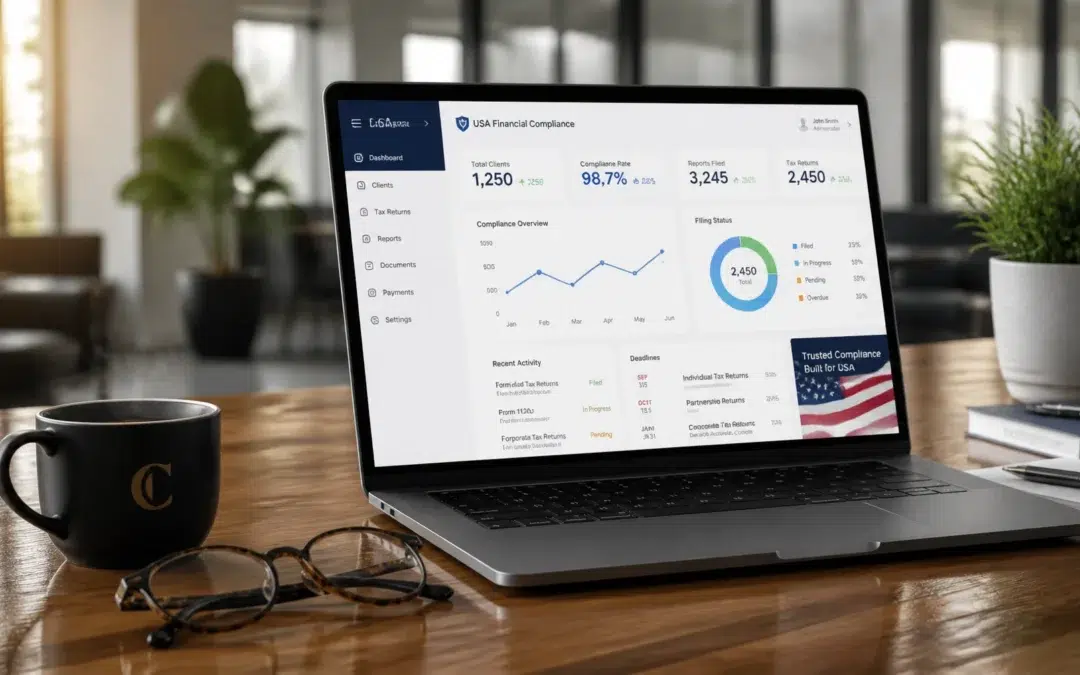
Staying compliant with USA tax regulations as an international seller is no longer a "set and forget" task. As we move through 2026, the Internal Revenue Service (IRS) and state-level authorities have introduced several critical changes that directly impact non-US residents operating USA LLCs or selling into the American market.
Navigating these shifts is essential to protect your business from hefty penalties and potential bans from major marketplaces. If you are feeling overwhelmed, don't worry. This guide breaks down the most significant updates for 2026, ensuring you remain focused on growth while we handle the operational heavy lifting of compliance.
The 3-Minute Summary: What You Need to Know Now
If you only have a few minutes, here are the three major pillars of USA tax compliance changing in 2026:
- Reporting Thresholds: The IRS is continuing its push for more granular data on payment transactions. If you use payment processors like Stripe or PayPal, expect more frequent 1099-K reporting triggers.
- Sales Tax Base Expansion: Several states, including Georgia, Kansas, and Pennsylvania, have expanded their sales tax reach to include more digital services, SaaS, and B2B products.
- BOI Deadlines: The Beneficial Ownership Information (BOI) reporting requirements under the Corporate Transparency Act (CTA) are now in full force. Failure to file for your US entity can result in criminal penalties and daily fines.
Modernize Your Reporting: The 1099-K and Form 5472 Shift
For international sellers, transparency is the new standard. The IRS has been progressively lowering the reporting threshold for Form 1099-K. This form tracks the "gross amount" of all reportable payment transactions.
For the 2026 tax year, if your business exceeds the updated thresholds (moving toward the long-delayed $600 limit), your payment processor will automatically report these figures to the IRS. This makes it impossible to "fly under the radar."
Maintain accurate records to ensure that the figures reported on your 1099-K align perfectly with your internal bookkeeping. Discrepancies often trigger automated IRS audits, which can be costly and time-consuming for international owners to resolve.
Furthermore, if you operate a Foreign-Owned Single Member LLC (FOSM-LLC), your obligation to file Form 5472 remains a top priority. The penalty for failing to file this form or filing it incorrectly has seen sharp increases in recent years. It is essential to report all "reportable transactions" between the LLC and its foreign owner to avoid a minimum penalty of $25,000 per violation.
Sales Tax 2026: The New "Digital Push"
Sales tax in the USA is managed at the state level, not by the federal government. This means international sellers often face 50 different sets of rules. In 2026, we are seeing a significant trend: Base Expansion.
States are no longer just taxing physical goods. To bolster their budgets, many states are now taxing:
- Digital Downloads & Streaming: If you sell software, e-books, or digital media, you may now have a sales tax nexus in more states than before.
- SaaS and Cloud Software: Subscription-based digital services are becoming a primary target for state revenue departments in Pennsylvania and Wyoming.
- B2B Services: Some professional services provided digitally are now being drawn into the tax net.
Register early if you hit the economic nexus thresholds. Most states trigger a registration requirement once you reach $100,000 in sales or 200 individual transactions within a calendar year. If you sell through marketplaces like Amazon or TikTok Shop, they will often collect and remit the tax for you, but you may still be required to file "zero-tax" returns in many jurisdictions to maintain your good standing.
The FinCEN BOI Deadline: A Non-Negotiable Requirement
Perhaps the most critical update for 2026 is the strict enforcement of the Beneficial Ownership Information (BOI) report. This is not a tax filing; it is a federal requirement managed by FinCEN (the Financial Crimes Enforcement Network).
If you have a US entity (LLC or Corporation) or if your foreign company is registered to do business in a US state, you must report the identities of the individuals who own or control the company.
- New Entities: If you form a US entity in 2026, you generally have only 30 days from the date of formation to file your initial BOI report.
- Existing Entities: If you formed your company before 2024 and haven't filed yet, you are already in the danger zone.
The consequences of ignoring BOI reporting are severe. Willful failure to report can lead to civil penalties of up to $500 for each day the violation continues and criminal penalties including imprisonment. At Sterlinx Global, we integrate BOI compliance into our standard suite to ensure our clients are never exposed to these risks.
Compliance for International Entities: Moving Beyond Simple Filing
Many international sellers believe that "tax compliance" is just something you do once a year. However, in the current 2026 environment, compliance is an ongoing operational process.
To stay ahead of the IRS and state authorities, your business needs a structured approach:
- Continuous Bookkeeping: Daily or weekly bookkeeping is no longer optional. Real-time data allows you to track your nexus thresholds accurately and prepare for 1099-K reconciliations.
- Entity Maintenance: Ensure your US LLC remains "Active" and "In Good Standing" by filing annual reports with the Secretary of State.
- W-8 Series Forms: Keep your W-8BEN or W-8BEN-E forms updated with your banks and marketplaces. This is how you claim tax treaty benefits and avoid the standard 30% flat withholding tax on US-source income.
Why Sterlinx Global is Your Partner in USA Compliance
We understand that you started your business to sell products and innovate, not to spend hours deciphering IRS publications. Sterlinx Global operates as a Global Tax Compliance Suite, providing a tech-driven, end-to-end solution for international sellers.
We don't just "advise": we deliver. Our team handles:
- Accurate bookkeeping tailored for cross-border commerce.
- Sales Tax registrations and ongoing filings across all 50 states.
- Federal tax filings including Form 1120 and Form 5472.
- FinCEN BOI reporting management.
By partnering with us, you provide the data, and we ensure the compliance is completed accurately and on time. This allows you to scale your USA operations with the confidence that your legal and financial foundation is secure.
Your 2026 USA Compliance Checklist
Use this checklist to verify your current standing:
Frequently Asked Questions (FAQ)
Does a UK company selling into the USA need to pay US income tax?
Generally, if you have no physical presence (employees, warehouse, or office) in the USA, you may be exempt under the UK-US Tax Treaty. However, using Amazon FBA warehouses can sometimes create a "Permanent Establishment." It is essential to have a professional review your specific operational model.
What happens if I miss the BOI filing deadline?
Missing the deadline can result in significant daily fines (up to $500/day) and potential criminal charges. If you have missed a deadline, talk to an expert immediately to rectify the filing.
Do I need a US bank account for Sales Tax?
While not strictly required by law, having a US-based or "virtual" US account (like Wise or Payoneer) makes it much easier to pay state tax departments, as many do not accept international credit cards or wire transfers.
Can I handle my own USA tax filings from abroad?
While possible, it is extremely difficult due to the complexity of multi-state nexus rules and the specific filing requirements for foreign-owned entities. Most international sellers find that the cost of professional compliance is far lower than the cost of IRS penalties.
Secure Your USA Business Growth
The USA remains the world’s most lucrative marketplace, but the 2026 tax landscape requires vigilance. Don't let compliance hurdles slow down your expansion.
Whether you are a UK Limited Company expanding into the States or a digital agency with US-based clients, we are here to ensure your taxes are calculated, filed, and managed with precision.
Contact us today to book a call and discover how our Global Tax Compliance Suite can protect your business.

by Ariful | May 23, 2026 | Canada Updates
Trading between Canada and the United Kingdom has never been more lucrative, but it has also never been more complex. As we move through 2026, the Canada Revenue Agency (CRA) has intensified its focus on the "digital economy," meaning the rules for GST/HST are shifting faster than ever. If you are a UK-based business selling to Canadian consumers, or a Canadian brand expanding into the British market, staying still is the fastest way to fall behind.
Don't worry, compliance doesn't have to be a barrier to your growth. At Sterlinx Global, we specialize in taking the weight of tax calculations and filings off your shoulders. This post will break down why daily monitoring of CRA updates is no longer optional and how you can streamline your operations to stay ahead of the curve.
Understand the $30,000 Threshold Before It Catches You
The most critical number for any cross-border seller in 2026 is C$30,000. This is the threshold for GST/HST registration in Canada. If your worldwide taxable revenues, including digital services and physical goods, exceed this amount over four consecutive calendar quarters, you are legally required to register.
Many UK businesses make the mistake of thinking this threshold only applies to sales within Canada. In reality, the CRA looks at your global footprint to determine your scale. If you are a growing SME or a high-volume ecommerce brand, you likely already hit this milestone months ago.
Register early to avoid penalties. Waiting until the CRA contacts you often results in backdated tax liabilities and heavy fines. By monitoring updates daily, you can identify the exact moment your business crosses the threshold and take proactive steps to register. This ensures you are collecting the correct tax from day one, rather than paying it out of your own profit margins later.
Choose the Right Path: Simplified vs. Normal GST/HST
In 2026, the CRA offers two distinct paths for non-resident sellers. Choosing the wrong one can cost you thousands in unclaimed credits or unnecessary paperwork.
The Simplified Regime (For B2C Focus)
This path was designed specifically for non-resident digital service providers and marketplace sellers. It is easier to set up, but there is a major catch: you generally cannot claim Input Tax Credits (ITCs) to recover the GST/HST you pay on your own business expenses.
The Normal Regime (For Full Compliance)
If you have significant physical operations, hold inventory in Canadian warehouses, or use Canadian service providers, the normal regime is often the better choice. It allows you to claim back the GST/HST you pay on imports and local services. This is essential for maintaining healthy cash flow in a competitive market.
Maintain a flexible strategy. Your business model might start as a simple digital service but evolve into physical product distribution. Daily tax updates will signal when the CRA changes the benefits of one regime over the other, allowing you to pivot your registration status before the next filing deadline.
Master the Provincial Tax Maze (GST vs. HST)
One of the most confusing aspects of selling in Canada is that the tax rate isn't the same everywhere. Depending on where your customer is located, you might need to charge 5% GST, or as much as 15% HST (Harmonized Sales Tax).
In provinces like Ontario, the rate is 13%. In the Atlantic provinces (New Brunswick, Nova Scotia, etc.), it jumps to 15%. If you are selling into British Columbia or Quebec, there are additional provincial taxes (PST/QST) to consider.
Automate your place-of-supply rules. You cannot manually track the location of every customer and apply the correct rate. This is why a tech-driven compliance system is vital. Daily updates ensure that if a province changes its rate, as often happens during budget season, your system updates immediately. This protects you from under-collecting tax and facing a shortfall during your annual audit.
Marketplace Rules: Who Is Actually Responsible?
If you sell through Amazon, Shopify, or eBay, you might assume the platform handles everything. While marketplaces (known by the CRA as "Distribution Platform Operators") do collect and remit tax on many transactions, the rules are nuanced.
In 2026, if you are registered under the Normal GST/HST regime, the responsibility for collecting tax often stays with you, not the platform. If you miscalculate this, you could end up with a double-taxation nightmare or, worse, no tax collected at all.
Verify your platform settings. Don't assume the "default" settings on your marketplace account are compliant with the latest CRA 2026 mandates. Keep your compliance data updated to ensure the platform knows exactly who is responsible for the remittance. For more on this, check out our guide on 7 mistakes you’re making with your Amazon accounting.
The Canada-UK Strategic Link
Since the UK is no longer part of the EU, trade agreements with Canada have become even more vital. Both countries are working to streamline digital trade, but this often leads to "compliance creep", new reporting requirements that pop up with little warning.
Managing sales across both jurisdictions requires a partner who understands both sides of the Atlantic. You might already be compliant with UK VAT, but are you applying the same rigor to your Canadian filings? If you need a refresher on the UK side, read our latest on UK VAT registration for growing SMEs.
Align your reporting periods. Syncing your UK and Canadian accounting cycles can save your team hours of reconciliation work. We help you align these processes so that your year-end filings are a smooth transition rather than a frantic scramble.
Why Sterlinx Global is the Answer to Daily Tax Changes
We aren't a traditional tax consultancy that gives you a "to-do" list and leaves you to it. Sterlinx Global is a Global Tax Compliance Suite. Our model is simple: you provide the data, and we complete the compliance on an ongoing basis.
- Daily Monitoring: We track the CRA and HMRC for every minor rule change so you don't have to.
- Accurate Bookkeeping: We handle the granular detail of your cross-border transactions.
- VAT/GST/HST Filings: We ensure every return is accurate, on time, and fully optimized for the latest 2026 rules.
- End-to-End Delivery: From initial registration to year-end accounts, we manage the entire lifecycle of your tax compliance.
This is why digital businesses and fast-growing SMEs trust us to handle their global expansion. We let you focus on growing your brand while we ensure your foundation is rock-solid.
Your 2026 Canada-UK Compliance Checklist
To stay ahead of the CRA and ensure your business remains profitable, follow these essential steps:
- Monitor Your Revenue: Track your 12-month rolling revenue. Once you hit C$30,000, start the registration process immediately.
- Audit Your Customer Data: Ensure you are collecting the customer's province at the point of sale to apply the correct GST/HST rate.
- Review Your Registration Type: Evaluate if the "Simplified" regime is still serving you or if the "Normal" regime's tax credits are worth the switch.
- Verify Platform Responsibilities: Check your Amazon/Shopify tax settings against your CRA registration status.
- Book a Compliance Review: Don't wait for an audit to find a mistake.
Keep your business moving. Compliance is the engine of a successful international business, not the brakes. By staying informed and partnering with experts who live and breathe tax updates, you turn a complex obligation into a competitive advantage.
Ready to simplify your Canada-UK tax compliance?
Stop worrying about the latest CRA updates and start focusing on your next big sale. Our team of specialists is ready to handle your bookkeeping, VAT, and GST filings with precision and speed.
Contact us today to book a call with an expert and see how we can take your compliance to the next level.
Frequently Asked Questions
What is the GST/HST registration threshold for Canada in 2026?
The threshold remains C$30,000 in taxable sales over four consecutive calendar quarters. This applies to both resident and non-resident sellers, including those in the UK.
Do I need to charge tax on digital services sold to Canadians?
Yes. Under the digital economy rules, most digital products (SaaS, ebooks, online courses) are subject to GST/HST based on the province where the consumer is located.
Can I claim back the tax I pay on imports to Canada?
Only if you are registered under the "Normal" GST/HST regime. The "Simplified" regime for non-residents does not allow for Input Tax Credits (ITCs).
Who collects GST/HST on Amazon.ca?
For many non-resident sellers, the marketplace (Distribution Platform Operator) is responsible. However, if you are registered under the normal regime, the responsibility may shift back to you. Always verify your specific status.
How often should I update my tax rates?
Tax rates can change with provincial budgets. Using a daily update system or a compliance partner like Sterlinx Global ensures you never charge the wrong amount.



