by Ariful | Jul 5, 2026 | Business
Build a Foundation for Unlimited Growth
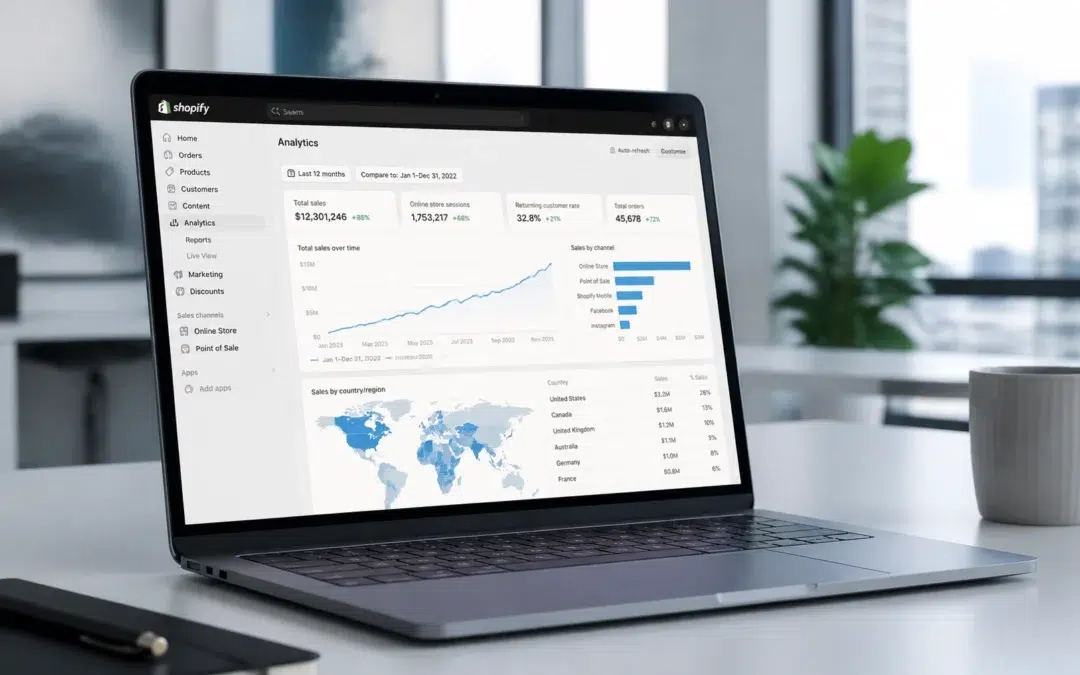
Before you push for 10x growth, your internal systems must be ready to handle the weight. Many Shopify owners fail because they focus on the “front end” (marketing and sales) while ignoring the “back end” (accounting and compliance). When your order volume spikes, manual bookkeeping becomes impossible, and errors in tax calculations can lead to devastating fines.
Automate your bookkeeping immediately. You should not be manually entering sales data into spreadsheets. In 2026, the standard is a direct integration between Shopify and your accounting software. We provide structured accounting for e-commerce that captures every transaction, refund, and fee automatically. This ensures your financial reporting is accurate in real-time, allowing you to make data-driven decisions about your inventory and marketing budgets.
Prepare your documentation. As you scale, you will likely face more scrutiny from banks, payment processors, and tax authorities. Ensure you have all necessary e-commerce documents prepared, including digital invoices that comply with local regulations in every country where you sell.
Master Global Tax Compliance
Expanding into new territories is the fastest way to scale, but it brings the challenge of cross-border tax compliance. Whether you are selling into the UK, USA, Canada, Australia, or the EU, each region has its own set of rules and thresholds.
Navigate UK and Commonwealth Markets
The UK remains a powerhouse for Shopify sellers. If you are a non-UK resident looking to tap into this market, you should understand why you should expand your business in the UK. We offer a Full Compliance Suite for UK Limited Companies, covering everything from bookkeeping and payroll to year-end filings and VAT management.
For those looking further afield, markets like Canada and Australia offer massive opportunities. In these regions, we provide the same comprehensive compliance delivery, ensuring you meet GST and income tax requirements without having to hire local staff in every country.
Conquer the European Union VAT Maze
The EU is a lucrative but complex market due to VAT (Value Added Tax). To scale effectively here, you need to understand the One-Stop Shop (OSS) and Import One-Stop Shop (IOSS) schemes. These systems allow you to manage VAT for all 27 EU member states through a single registration.
Don’t worry about the complexity of individual registrations in Germany, France, or Italy. We specialise in helping businesses comply with VAT in the EU by handling the registrations and recurring filings for you. This allows you to offer local-style shopping experiences, with taxes included in the price, without the administrative headache.
Optimize Your Shopify Multi-Market Setup
Shopify has introduced powerful tools to help you scale internationally. In 2026, using “Shopify Markets” is essential. This tool allows you to:
- Show local currencies: Customers are more likely to buy when they see prices in their own currency.
- Translate content: Localized product descriptions and checkout pages significantly increase conversion rates.
- Calculate duties and taxes at checkout: Nothing kills a customer relationship faster than an unexpected bill from a courier for import duties. Use Shopify’s native tools to collect these at the point of sale.
By integrating these features with a robust global tax strategy, you ensure that the price the customer sees is the “landed cost,” leading to fewer abandoned carts and fewer customer service complaints.
Implement a Compliance-Driven Operating Model
To scale sustainably, you must move away from traditional tax advisory models that only look at your books once a year. Instead, adopt a “daily compliance” mindset. This is where Sterlinx Global acts as your partner.
Our operating model is simple: you provide the data from your Shopify store and marketplaces, and we complete the compliance on an ongoing basis. This includes:
- Daily or weekly bookkeeping: Keeping your figures current so you always know your true margins.
- Ongoing tax calculations: Ensuring you are setting aside enough for VAT, GST, or Sales Tax.
- Deadline management: We track and meet all filing deadlines for you, avoiding late payment fines that can eat into your profits.
Discover the 5 ways Sterlinx can help your business transition from a struggling SME to a global ecommerce brand.
Safeguard Your Business with Data Governance
As you scale, you will handle more customer data. Compliance with GDPR in the UK/EU and various privacy laws in the US is mandatory. Ensure your Shopify store is configured to handle “right to be forgotten” requests and that your privacy policy is up to date for 2026 standards.
Data governance isn’t just about privacy; it’s also about business continuity. Keep clean records of your SKU movements, returns, and VAT invoices. This “clean data” approach makes it easier to secure funding or sell your business in the future, as investors will look for a clear, audit-ready paper trail.
Checklist for Shopify Scaling in 2026
Use this checklist to ensure you haven’t missed any critical steps in your growth journey:
- Integrate Accounting: Connect Shopify to a professional accounting system.
- Review Tax Thresholds: Check if your sales in the UK, US, or EU have crossed registration limits.
- Enable Multi-Currency: Activate Shopify Markets for all target regions.
- Automate VAT/GST Filings: Partner with a compliance suite to handle recurring filings.
- Audit Logistics: Ensure your shipping settings correctly reflect DDP (Delivered Duty Paid) where possible.
- Secure Your Data: Verify GDPR and privacy compliance across all apps and integrations.
Why Scaling Requires a Professional Partner
Many entrepreneurs try to “DIY” their way to a million-dollar turnover. While that might work in the early stages, it eventually becomes a bottleneck. Your time is best spent on product development, customer acquisition, and refining your brand story — not on reconciling sales tax reports. A professional compliance partner removes the administrative burden, reduces risk, and gives you the strategic insight you need to expand into new markets with confidence.

by Ariful | Jul 4, 2026 | UAE Updates
TITLE: Your Essential Guide to Expanding Your SME into the UAE in 2026
Choose Your Structure: Mainland vs. Free Zone
The first and most critical decision you will make is where to “anchor” your business. In the UAE, you generally have two main paths: the Mainland or a Free Zone. Each offers distinct advantages depending on your business model.
Scale with a Mainland Company
If your goal is to trade directly with consumers across all seven Emirates or bid for government contracts, a mainland license is your best bet. Historically, this required a local partner, but under current regulations, 100% foreign ownership is available for many business activities.
- Best for: Retailers, on-the-ground service providers, and large-scale distributors.
- Key Benefit: Full access to the local UAE market and no geographic restrictions on where you can operate.
Optimize with a Free Zone Setup
For digital businesses, e-commerce brands, and international consultants, Free Zones are often the more attractive option. With over 40 specialized zones (like Dubai Multi Commodities Centre or Abu Dhabi Global Market), you can find a hub tailored to your specific industry.
- Best for: E-commerce, tech startups, SaaS companies, and digital agencies.
- Key Benefit: Simplified setup processes, 100% foreign ownership, and potential exemptions from corporate tax on qualifying income.
Master the 2026 UAE Tax Landscape
One of the biggest draws to the UAE has traditionally been its “tax-free” status. While the UAE remains highly competitive, it is essential to understand that “tax-free” does not mean “compliance-free.” Since the introduction of Federal Corporate Tax, businesses must be proactive.
Navigate the 9% Corporate Tax
The UAE currently applies a 9% Federal Corporate Tax on taxable profits exceeding AED 375,000. This is still one of the lowest rates globally, making it a powerful incentive for growing SMEs.
- Stay Compliant: Every business, regardless of profit levels, must register for Corporate Tax with the Federal Tax Authority (FTA).
- Leverage Reliefs: Small Business Relief may still be available for eligible entities with revenue below a certain threshold. It is essential to check the latest 2026 updates to see if you qualify.
Manage the 5% VAT Requirement
If your taxable supplies and imports in the UAE exceed AED 375,000 over a 12-month period, VAT registration is mandatory. Many SMEs choose to register voluntarily once they cross the AED 187,500 mark to reclaim VAT paid on business expenses.
- Keep Accurate Records: You must issue valid tax invoices and file quarterly VAT returns.
- Avoid Fines: Late registration or filing can result in significant penalties. Using a structured bookkeeping system from day one is the best way to stay safe.
For more detailed insights on the current regulations, you can explore our dedicated UAE updates section or learn more about Dubai tax-free benefits.
The Step-by-Step Setup Checklist for 2026
Setting up doesn’t have to be a headache. Follow this structured approach to get your doors open faster.
- Define Your Activity: Be specific. The UAE uses a standardized list of business activities. Choosing the wrong one can lead to delays in licensing or banking.
- Select Your Trade Name: Submit your desired name for approval. Ensure it doesn’t violate any trademark or local cultural guidelines.
- Apply for Your License: Submit your incorporation documents to the relevant Economic Department (for Mainland) or Free Zone Authority.
- Secure Your Office Space: Whether it’s a physical office in a downtown tower or a “flexi-desk” in a Free Zone, you will need a registered address to finalize your license.
- Open a Corporate Bank Account: This is often the most time-consuming step. Banks will require your trade license, proof of address, and a clear business plan.
- Register with the FTA: As soon as your license is issued, initiate your Corporate Tax and VAT registrations to ensure you are compliant from day one.
Maintain Ongoing Compliance Without the Stress
Setting up is just the beginning. To thrive in the UAE, you must maintain a “compliance-first” mindset. The UAE authorities are increasingly focused on transparency and economic substance.
Keep Impeccable Bookkeeping
The days of “shoebox accounting” are over. To file accurate VAT and Corporate Tax returns, you need digital, real-time bookkeeping. This is especially true for cross-border e-commerce sellers who need to track imports and exports across multiple jurisdictions.
Understand Economic Substance Regulations (ESR)
If your business performs certain “relevant activities” (like banking, insurance, or headquarters business), you must demonstrate that you have a genuine economic presence in the UAE. This includes having physical premises and employees in the country.
Partner with a Global Tax Compliance Expert
The UAE market offers unparalleled opportunities, but the administrative burden of staying compliant can distract you from what you do best: growing your business.
This is where Sterlinx Global comes in. We aren’t just advisors; we are your end-to-end compliance delivery team. We specialize in taking the weight of bookkeeping, VAT filings, and year-end accounts off your shoulders. Our structured, tech-driven system ensures that while you focus on scaling your SME in the UAE, your compliance is handled accurately and on time, every single month.
Whether you are a UK Limited Company expanding to Dubai or a USA-based e-commerce brand entering the Middle East, we provide the global tax suite you need to operate without borders.
Frequently Asked Questions
Can I own 100% of my company in the UAE?
Yes! Recent changes to the UAE Commercial Companies Law allow 100% foreign ownership in most sectors for both mainland and free zone companies.
Is the UAE still a “tax haven”?
The UAE remains a low-tax jurisdiction. With a 9% corporate tax rate and 0% on many qualifying incomes, it offers significant advantages compared to the UK, USA, or EU. However, it is now a regulated tax environment requiring formal registrations and filings.
How long does it take to set up a business in the UAE?
Free zone setups can often be completed in 3 to 10 days. Mainland setups might take slightly longer depending on the required approvals for your activity.
by Ariful | Jul 3, 2026 | UK Updates
TITLE: 10 Essential Facts About Making Tax Digital for Income Tax Self Assessment
Navigating the UK tax landscape is about to change significantly for small business owners, sole traders, and digital entrepreneurs. HMRC is rolling out Making Tax Digital (MTD) for Income Tax Self Assessment (ITSA) starting in April 2026. This isn’t just a minor tweak to how you report income; it is a fundamental shift toward a fully digital tax system.
If you are used to filing a single tax return once a year, the new rules will require a more structured approach to your accounting. Don’t worry: while the changes are significant, they are designed to reduce manual errors and give you a clearer picture of your tax obligations throughout the year. At Sterlinx Global, we specialize in helping businesses transition to these digital systems smoothly.
To help you prepare, here are the 10 most critical things you need to know about the upcoming MTD for ITSA rules and how they will impact your business operations.
1. The 2026 Start Date and Income Thresholds
The first phase of MTD for ITSA begins on 6 April 2026. Initially, it applies to self-employed individuals and sole traders with a qualifying gross income of more than £50,000.
It is important to note that the threshold is based on your turnover (gross income), not your profit. If your total business income exceeds this limit, you must comply with the new digital reporting requirements. The government has already scheduled further phases to bring more businesses into scope:
- April 2027: The threshold drops to £30,000.
- April 2028: The threshold is expected to drop further to £20,000.
2. Mandatory Digital Record Keeping
Under the new rules, you can no longer rely on paper records or simple manual spreadsheets to manage your business accounts. HMRC requires you to maintain digital records of every transaction: both income and expenses.
This means using commerce-platform-compatible accounting software or bridging software to record your financial data. Keeping your records digitally ensures that your data is accurate, searchable, and ready for submission at any time. Moving to a digital system now will save you time and prevent a last-minute rush when the mandate takes effect.
3. Transitioning from Annual to Quarterly Updates
One of the biggest changes is the frequency of reporting. Instead of filing one annual Self Assessment tax return, you will be required to submit quarterly updates to HMRC.
These updates provide a summary of your business income and expenses for each three-month period. By submitting data every quarter, you get a real-time estimate of the tax you owe, which helps with better cash flow management. You won’t have to wait until the end of the year to find out your tax bill, reducing the risk of unpleasant financial surprises.
4. The New “Final Declaration” Process
While you will be submitting data quarterly, you still need to finalize your tax position for the year. The traditional SA100 tax return will be replaced by a Final Declaration.
Before making this declaration, you will submit an End of Period Statement (EOPS) for each business income stream. This is where you make adjustments for capital allowances, reliefs, and any accounting corrections. Once all income streams are finalized, you confirm your total tax liability via the Final Declaration by 31 January following the end of the tax year.
5. Using HMRC-Compatible Software is Essential
You cannot submit MTD updates through the standard HMRC online portal that many currently use for Self Assessment. You must use HMRC-compatible software that can connect directly to HMRC’s systems via an API.
For many digital and e-commerce businesses, this means integrating your sales platforms with a robust accounting suite. Sterlinx Global provides a structured, tech-driven system that handles these connections for you, ensuring your data flows seamlessly from your storefront to the tax authorities without manual data entry.
6. Combining Multiple Income Streams
If you run more than one business or have multiple sources of self-employment income, HMRC looks at the combined total to determine if you meet the threshold.
For example, if you earn £25,000 from an online shop and £30,000 from freelance consulting, your total qualifying income is £55,000. This puts you in scope for the April 2026 deadline. You will need to keep separate digital records for each business type but report them under the single MTD for ITSA umbrella.
7. Avoiding Costly Non-Compliance Penalties
HMRC is introducing a new points-based penalty system to encourage timely filing. If you miss a deadline for a quarterly update or a final declaration, you will receive a point. Once you reach a certain threshold of points, a financial penalty is triggered.
Maintaining a regular bookkeeping schedule is the best way to avoid late payment fines. Our team at Sterlinx Global manages ongoing compliance for our clients, ensuring that every deadline is met and your records are always up to date.
8. Preparing for Digital Exclusion Exemptions
We understand that not every business owner is comfortable with digital tools. HMRC does offer exemptions for those who are “digitally excluded.” This may apply due to age, disability, remote location (lack of internet), or religious grounds.
However, these exemptions are granted on a case-by-case basis and require a formal application to HMRC. For the vast majority of UK Limited Companies and SMEs, digital reporting will be the mandatory standard. If you are worried about the technology, partnering with a digital-first accounting firm can remove the burden from your shoulders.
9. The Benefit of Real-Time Tax Visibility
While more frequent reporting might seem like extra work, the benefit is greater financial control. By using digital software, you can see your estimated tax liability grow or shrink in real-time as you record expenses.
This allows you to set aside the correct amount of money for tax throughout the year rather than scrambling to find funds in January. It also makes it easier to claim business expenses as they happen, ensuring you don’t lose out on tax savings because you lost a paper receipt from eight months ago.
10. Why You Should Start the Transition Early
The deadline of April 2026 may seem far away, but setting up digital systems takes time. We recommend that businesses start using MTD-compatible software now.
Starting early allows you to:
- Clean up your data: Ensure your opening balances and previous records are accurate.
- Build the habit: Get used to recording expenses and reconciling bank statements weekly or monthly.
- Integrate your systems: Connect your Amazon, Shopify, or eBay stores to your accounting software before the rush.
How Sterlinx Global Supports Your Digital Transition
At Sterlinx Global, we aren’t just tax advisors; we are your Global Tax Compliance partner. We provide a full-suite accounting and compliance service that is purpose-built for the digital age.
We take the data from your business operations and handle the heavy lifting of bookkeeping, VAT management, and MTD reporting. Our structured system ensures that your UK Limited Company stays compliant, giving you peace of mind to focus on growing your business.
by Ariful | Jul 2, 2026 | US Updates
TITLE: Avoiding International Tax Pitfalls in the USA, Canada, and Australia
Expanding your business into the USA, Canada, and Australia is a major milestone for any UK-based ecommerce brand or digital service provider. These markets offer immense scale, but they also bring a complex web of tax and corporate regulations that can catch even seasoned entrepreneurs off guard. In 2026, the stakes are higher than ever, with updated economic nexus rules and stricter transparency requirements.
Failure to stay compliant doesn’t just result in fines; it can lead to frozen bank accounts, revoked business licenses, and a damaged reputation with international customers. Don’t worry: navigating these waters is manageable when you have a structured system in place. At Sterlinx Global, we operate as your global tax compliance partner, managing the heavy lifting of data processing and filing so you can focus on growth.
Here is your guide to avoiding the most common international compliance pitfalls and ensuring your expansion remains a success.
Navigate the USA Sales Tax Nexus Trap
The single biggest pitfall for UK businesses entering the US market is “Sales Tax Nexus.” In the United States, there is no single national VAT. Instead, over 45 states have their own sales tax laws. You trigger “nexus” (a legal obligation to collect and remit tax) when you have a sufficient connection to a state.
Understand Economic Nexus Thresholds
In 2026, physical presence (like a warehouse or employee) isn’t the only trigger. “Economic Nexus” means that once your sales reach a certain level in a state, you are legally required to register.
Most states use a threshold of $100,000 in gross sales. Previously, many states also used a “200 transaction” count, but as of 2026, many jurisdictions like Illinois, Alaska, and Utah have removed the transaction count to simplify rules for small sellers. However, states like California maintain a higher threshold of $500,000.
Register before you cross the line. Monitoring your sales daily is essential to avoid retroactive tax bills and interest. We recommend a “lookback” every month to ensure you haven’t surged past a threshold in a new state.
Comply with BOI Reporting for USA LLCs
If you operate through a USA LLC, you must comply with the Corporate Transparency Act (CTA). This requires filing a Beneficial Ownership Information (BOI) report with FinCEN. This isn’t a tax return: it’s a transparency filing that identifies who actually owns or controls the company.
Missing the BOI deadline can lead to civil penalties of up to $500 for each day that the violation continues. If you have formed a new LLC in 2026, you generally have 90 days from the date of formation to file this report.
Keep Your LLC in Good Standing
Maintaining a USA LLC involves more than just a one-time setup. You must:
- Appoint a Registered Agent: You need a physical address in your state of formation to receive legal documents.
- File Annual Reports: Most states, such as Delaware or Wyoming, require an annual report or franchise tax payment to keep the entity active.
- Separate Finances: Never mix personal funds with your business bank account. Doing so “pierces the corporate veil,” potentially making you personally liable for business debts.
Master the Canadian GST/HST Thresholds
Canada’s tax system is a blend of federal and provincial taxes, which can be confusing for international sellers. The primary pitfall here is failing to register for the Goods and Services Tax (GST) or Harmonized Sales Tax (HST) at the right moment.
Monitor the CAD 30,000 Limit
In Canada, you are considered a “small supplier” until your worldwide taxable supplies exceed CAD 30,000 over four consecutive calendar quarters. Once you cross this threshold, registration is mandatory.
Register promptly to claim credits. One benefit of being registered is the ability to claim Input Tax Credits (ITCs) on the GST/HST you pay on business expenses, such as Canadian warehousing or logistics fees. By not registering when you should, you lose out on these recoveries and face penalties for uncollected tax.
Determine the Correct Provincial Rate
Depending on where your customer is located, you will charge different rates:
- HST Provinces: Ontario (13%), New Brunswick, Newfoundland and Labrador, Nova Scotia, and Prince Edward Island (15%).
- GST + PST/QST Provinces: British Columbia, Saskatchewan, Manitoba, and Quebec require the 5% federal GST plus a separate provincial sales tax.
This complexity is why a tech-driven accounting system is vital. You must accurately map every customer’s location to the correct tax rate to avoid under-collecting.
Stay Ahead of Australian GST Requirements
Australia is a lucrative market for UK digital businesses and ecommerce brands, but the Australian Taxation Office (ATO) is vigilant about compliance for non-resident entities.
Identify the AUD 75,000 Registration Trigger
If your business has a “GST turnover” (the value of your taxable sales in Australia) of AUD 75,000 or more in a 12-month period, you must register for GST. This applies to both physical goods and “cross-border supplies of digital products and services.”
If you sell digital services: like SaaS, apps, or digital downloads: to Australian consumers, you are responsible for GST once you hit the threshold.
Maintain Regular BAS Filings
Once registered, you must lodge a Business Activity Statement (BAS). Most international sellers lodge these quarterly. A common pitfall is forgetting to lodge a “Nil” BAS if you had no sales in a particular period. The ATO can still issue “Failure to Lodge” penalties even if no tax is owed.
Keep your records for at least five years. Australia has strict record-keeping requirements, and having your data organized and ready for an ATO audit is the best way to protect your business.
The Pitfalls of “DIY” International Accounting
Many SMEs try to manage international compliance using manual spreadsheets or basic software setups. This often leads to the three most dangerous pitfalls:
- Missed Deadlines: US sales tax returns, Canadian GST filings, and Australian BAS all have different due dates. Missing just one can trigger automated penalties.
- Inaccurate Data Mapping: If your ecommerce platform isn’t correctly synced with your accounting software, you may overpay or underpay tax, leading to cash flow issues or audit risks.
- Lack of Entity Maintenance: Focusing only on the tax and ignoring the “legal health” of your USA LLC or foreign entity can lead to your company being struck off the register.
How Sterlinx Global Streamlines Your Global Compliance
This is why we built Sterlinx Global as a Global Tax Compliance Suite. We are not a traditional tax consultancy that simply gives advice; we are the engine that completes your compliance every day.
Our structured operating model ensures you stay on the right side of the law across the USA, Canada, and Australia:
- Automated Data Sync: We pull data from your marketplaces (Amazon, Shopify, etc.) to ensure every transaction is accounted for.
- Ongoing Filing: We manage the registration and filing for US Sales Tax, Canadian GST/HST, and Australian GST.
- Full Suite Support: For

by Ariful | Jul 1, 2026 | EU VAT Updates
TITLE: How to Master Cross-Border VAT in 2026: UK & EU Compliance Guide
Expanding your business internationally is an exciting milestone, but it comes with a significant challenge: global tax compliance. As we move through 2026, the rules for cross border VAT have become more integrated yet more complex. Whether you are selling physical goods on Amazon, offering SaaS subscriptions, or providing digital services to global clients, staying compliant is no longer optional: it is a business necessity.
Don’t worry; you don’t have to navigate this maze alone. At Sterlinx Global, we act as your dedicated compliance partner, ensuring your bookkeeping, tax calculations, and filings are handled with precision. This guide will walk you through everything you need to know to maintain a healthy, compliant business across the UK and the EU.
Master the EU €10,000 Micro-Threshold
If you are an EU-based business selling to consumers (B2C) across different Member States, the first number you need to remember is €10,000. This is the EU-wide micro-threshold for cross-border distance sales of goods and digital services.
Stay under the limit to simplify your reporting. If your total cross-border B2C turnover stays below €10,000 per calendar year across the entire EU, you can charge your home country’s VAT rate and report it domestically. This is a massive win for small businesses just starting their European expansion.
Register for OSS once you scale. The moment your sales exceed that €10,000 mark, you must charge the VAT rate of the customer’s country. To avoid registering in 27 different nations, you can use the Union One-Stop Shop (OSS). This system allows you to file a single quarterly return for all your EU-wide B2C sales. For more details on navigating these updates, check out our 2026 EU VAT alert.
Navigate the UK Frontier: The £135 Rule
For businesses selling into the UK, the rules are distinct but structured. Unlike the EU, the UK does not offer a micro-threshold for non-UK sellers. If you are a non-UK business selling goods to UK consumers, you are often required to register for VAT from your very first sale.
Collect VAT at checkout for low-value imports. For goods with an intrinsic value of £135 or less, you (or the marketplace you sell on) must collect UK VAT at the point of sale. You then remit this to HMRC through your regular filings. This system ensures your parcels clear customs quickly without the customer being hit with unexpected “VAT on delivery” charges.
Manage higher-value shipments correctly. For orders over £135, VAT and customs duties are typically charged at the point of import. To provide a seamless customer experience, many of our clients opt for a “delivered-duty-paid” model. This is where professional vat return services uk become essential, as we help you manage the complex reconciliation between import VAT and sales data. You can find more about initial steps in our UK limited company compliance guide.
Prepare for the July 2026 EU Customs Shift
A major change is arriving on 1 July 2026 that every international seller must prepare for. The EU is removing the existing customs duty-free threshold for low-value parcels.
Watch out for the €3 flat duty. Under the new rules, a flat customs duty of €3 per line item will apply to low-value B2C parcels (up to €150). This is in addition to the VAT already collected. This change aims to level the playing field for EU-based sellers and requires you to update your pricing models and checkout systems immediately.
Use IOSS to stay ahead. The Import One-Stop Shop (IOSS) remains the gold standard for shipping goods into the EU. By using an IOSS number, you ensure that VAT is handled at checkout and your parcels enter the “green channel” for faster customs clearance. Without it, your customers may face handling fees and delays, which can damage your brand reputation.
Why Professional VAT Return Services in the UK are Essential
Managing cross border VAT involves more than just knowing the rates. It requires a structured, tech-driven approach to data and filing. Relying on manual spreadsheets in 2026 is a recipe for errors and late-payment fines.
Get accurate, daily reporting. Our compliance suite doesn’t just look at your taxes once a quarter. We handle the ongoing bookkeeping and tax calculations on a daily basis. This means your records are always up-to-date, allowing for “Making Tax Digital” (MTD) compliance without the last-minute stress.
Avoid the risk of non-compliance. HMRC and EU tax authorities have increased their data-sharing capabilities. They can now easily spot discrepancies between marketplace sales reports and VAT filings. By choosing specialized vat return services uk, you ensure that your Amazon, Shopify, or eBay data is perfectly reconciled with your tax returns. We provide a practical compliance playbook to help you understand these intricacies.
Your 2026 Cross-Border Compliance Checklist
Follow these steps to ensure your business remains on the right side of the law while you focus on growth:
- Audit your sales locations: Identify exactly where your customers are located and whether you have exceeded the €10,000 EU threshold or the UK registration requirements.
- Register for the right schemes: Determine if you need Union OSS (for EU distance sales), Non-Union OSS (for digital services), or IOSS (for imports).
- Update your checkout technology: Ensure your website correctly calculates VAT based on the customer’s destination and incorporates any new duties, like the July 2026 €3 customs fee.
- Maintain flawless records: Keep invoices and transaction data for at least 10 years for EU sales. This is where our automated bookkeeping services provide the most value.
- Partner with experts: Don’t try to be a tax expert and a CEO at the same time. Let a dedicated compliance team handle the filings so you can focus on your product.
Frequently Asked Questions
Do I need a UK VAT number if I only sell digital services?
Yes. For non-UK suppliers of digital services (SaaS, e-books, software) to UK consumers, there is effectively a £0 threshold. You must register for UK VAT and charge the standard 20% rate from your first sale.
What is the difference between OSS and IOSS?
OSS (One-Stop Shop) is generally for goods already located within the EU or services provided within the EU. IOSS (Import One-Stop Shop) is specifically for goods imported into the EU from a third country (like the UK, USA, or China) in consignments valued at €150 or less.
How does the July 2026 duty change affect my pricing?
If you ship low-value goods into the EU, you will need to account for an additional €3 duty per item. You should decide whether to absorb this cost or pass it on to the customer by adjusting your international shipping or product rates.
Can Sterlinx Global manage my US Sales Tax as well?
Absolutely. While this guide focuses on the UK and EU, we provide a Full Compliance Suite for the USA, Canada, and Australia as well. We handle everything from nexus determination to Sales Tax filing



